Fire Safety Landscaping
Structural changes that protect your home from fire. Crushed rock perimeters, retaining walls, non-combustible paths, and earthworks to create CFA-recommended defendable space around your property.
Your garden is either protecting your home or putting it at risk during a bushfire. The Country Fire Authority's Landscaping for Bushfire guide is clear: the type, quantity, and arrangement of fuel immediately surrounding your home has a direct impact on whether the building survives. Australian Trenching and Excavations carries out the structural earthworks and crushed rock installation that the CFA recommends — replacing combustible garden materials with non-flammable alternatives, reshaping the ground to reduce fire travel, and constructing the retaining walls and paths that create defensible space around your property.
Crushed Rock Perimeter Buffers
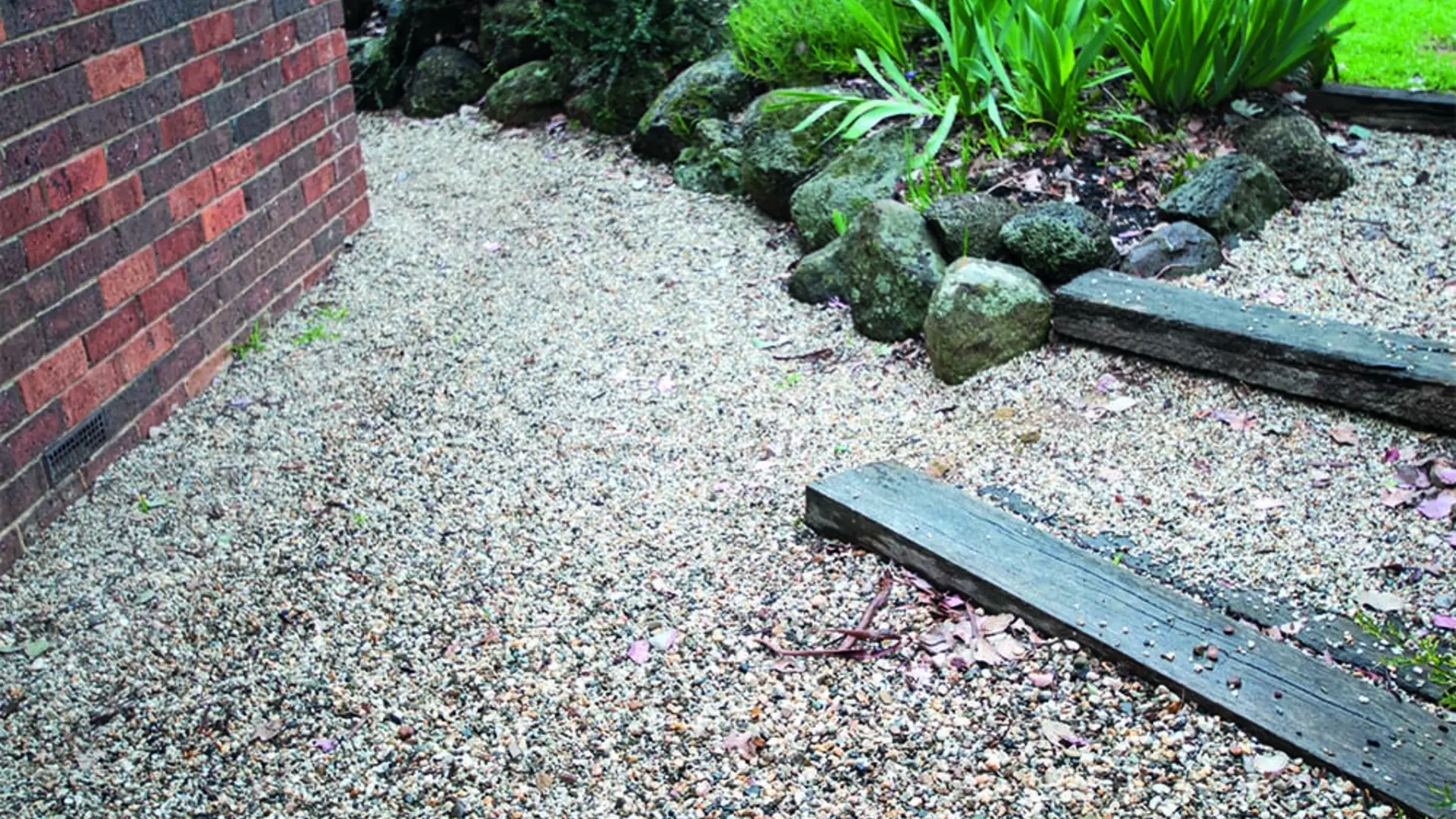
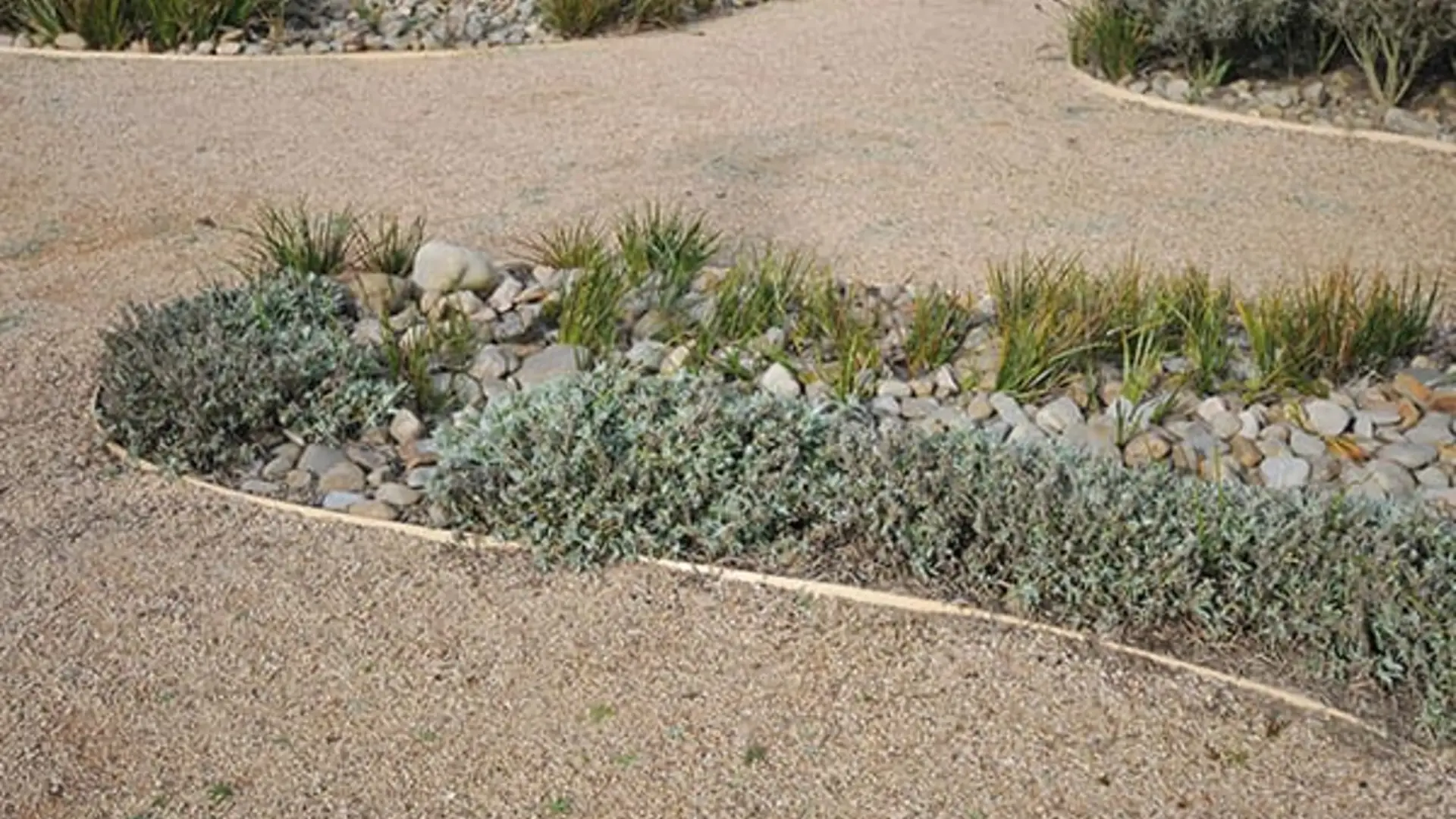
The CFA recommends replacing all organic mulch and flammable materials within 10 metres of your home with non-combustible alternatives, with the most critical zone being the immediate perimeter directly against your walls, under decks, and below windows. Bark mulch, woodchips, and dry plant matter in this zone catch embers and carry fire straight to the structure. Crushed rock, gravel, scoria, or river pebbles replace these materials completely, eliminating the ember-catch zone immediately surrounding your home. We supply and lay crushed rock perimeter buffers to CFA-recommended widths, graded to drain correctly away from the building.
Non-Combustible Paths & Gravel Breaks
One of the most effective ways to reduce fire spread across a garden is to break up continuous fuel with non-combustible surfaces. The CFA identifies paths, driveways, and gravel areas as tools for separating garden beds and preventing fire travelling uninterrupted toward the house. Crushed rock paths between garden beds, gravel dry creek beds, and paved separators all interrupt this fuel continuity. We grade and shape the earthworks for these features and supply and place the crushed rock, delivering a result that is both fire-safe and functional year round.
Retaining Walls for Fire Safety
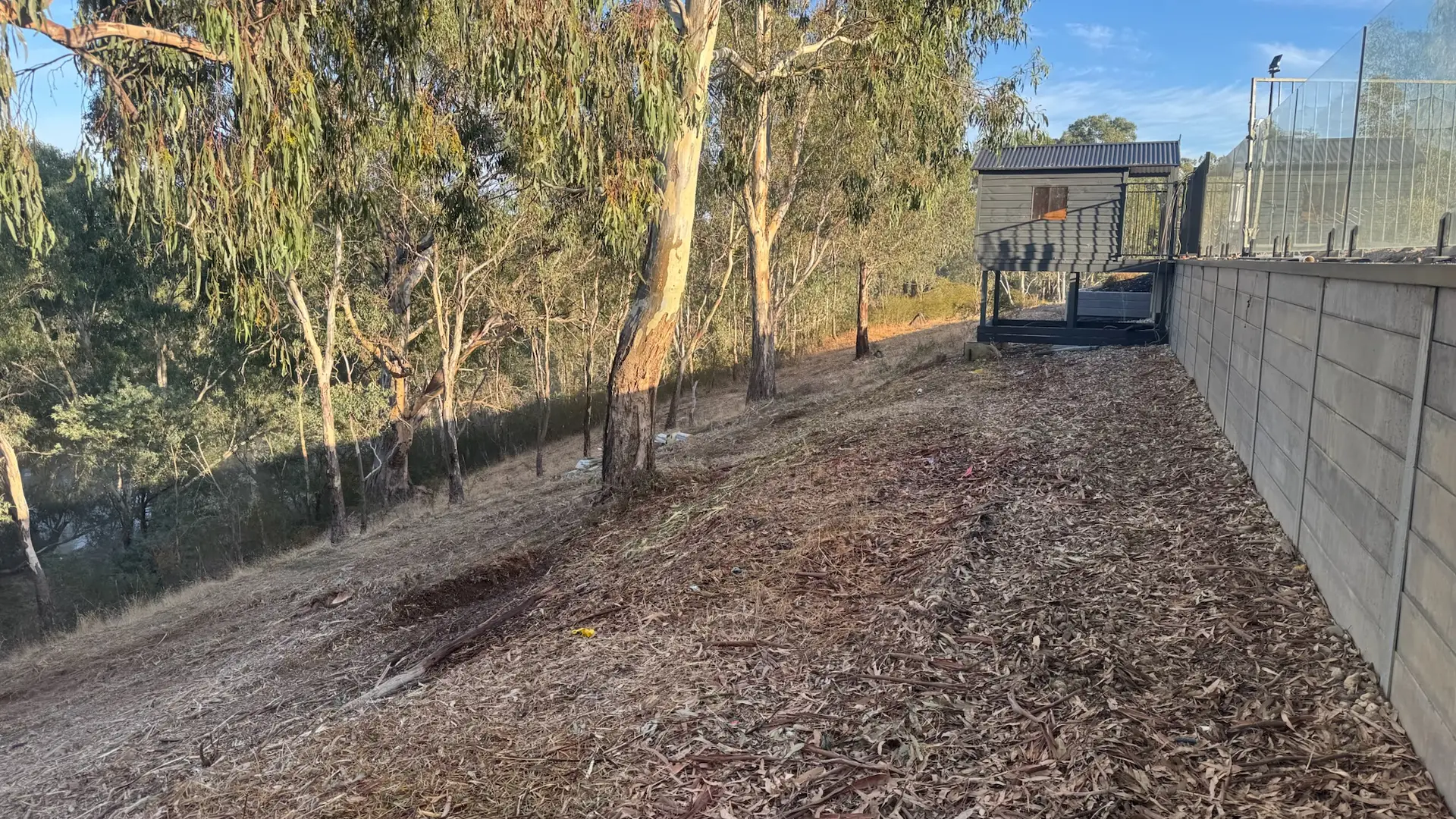
The CFA specifically recommends using masonry, concrete, stone, brick, and earth as hard landscape materials in place of timber for garden edges, raised beds, and retaining structures, because these materials act as radiant heat barriers rather than adding fuel. A concrete or block retaining wall replacing a timber sleeper garden bed removes combustible structure from the defendable space and provides a solid barrier that slows radiant heat. We construct concrete and block retaining walls as part of fire safety structural landscaping scopes, coordinating drainage behind the walls to prevent soil movement during the first wet season after installation.


Removing Flammable Objects from the Inner Zone
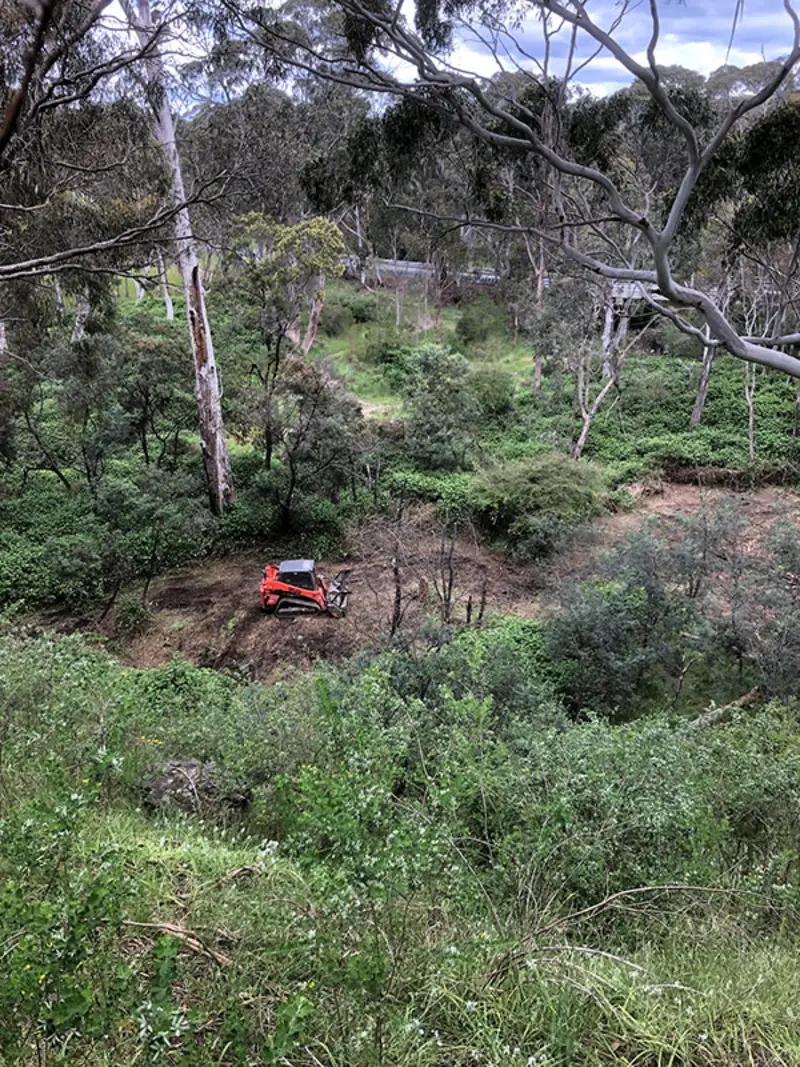
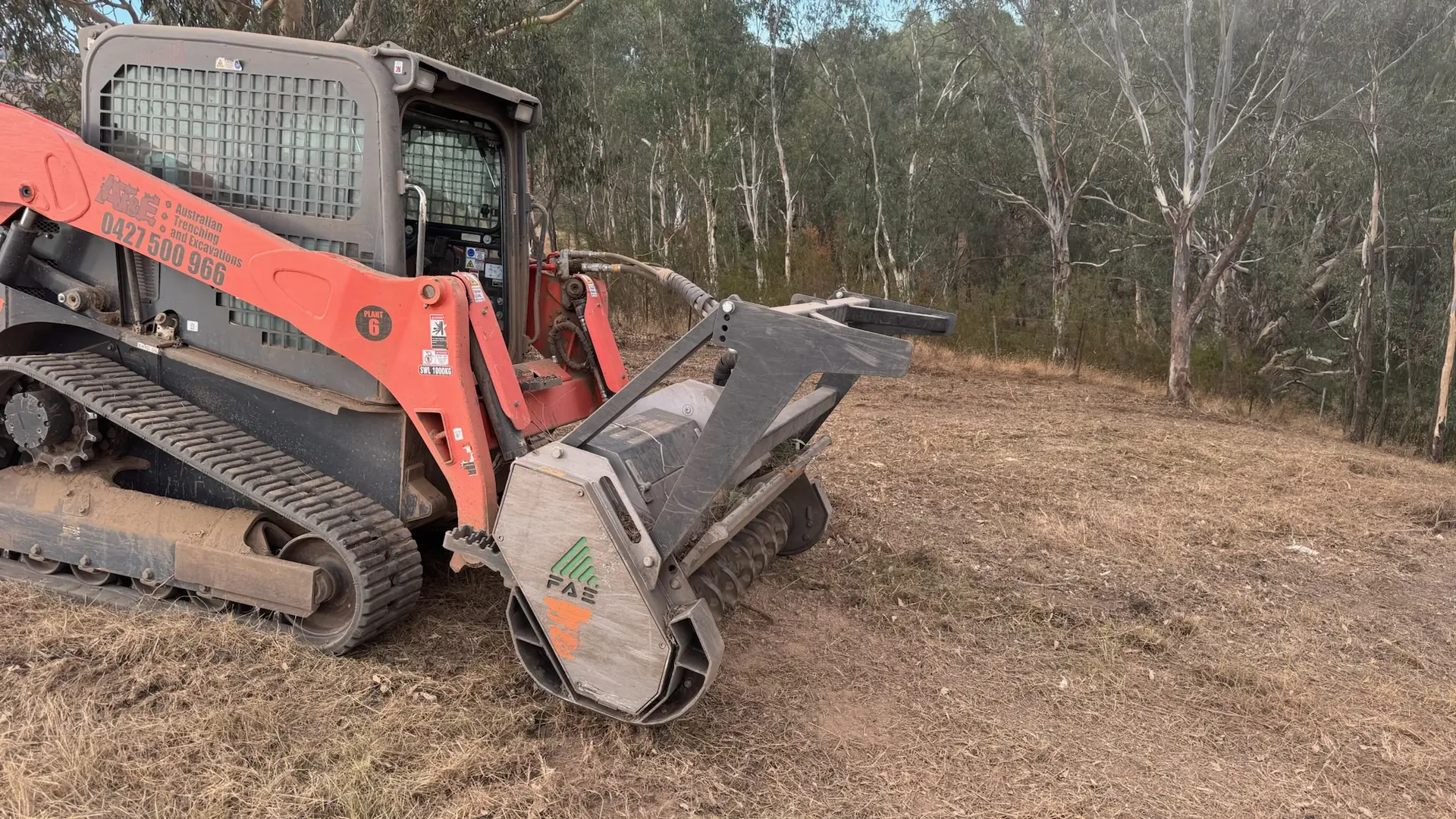
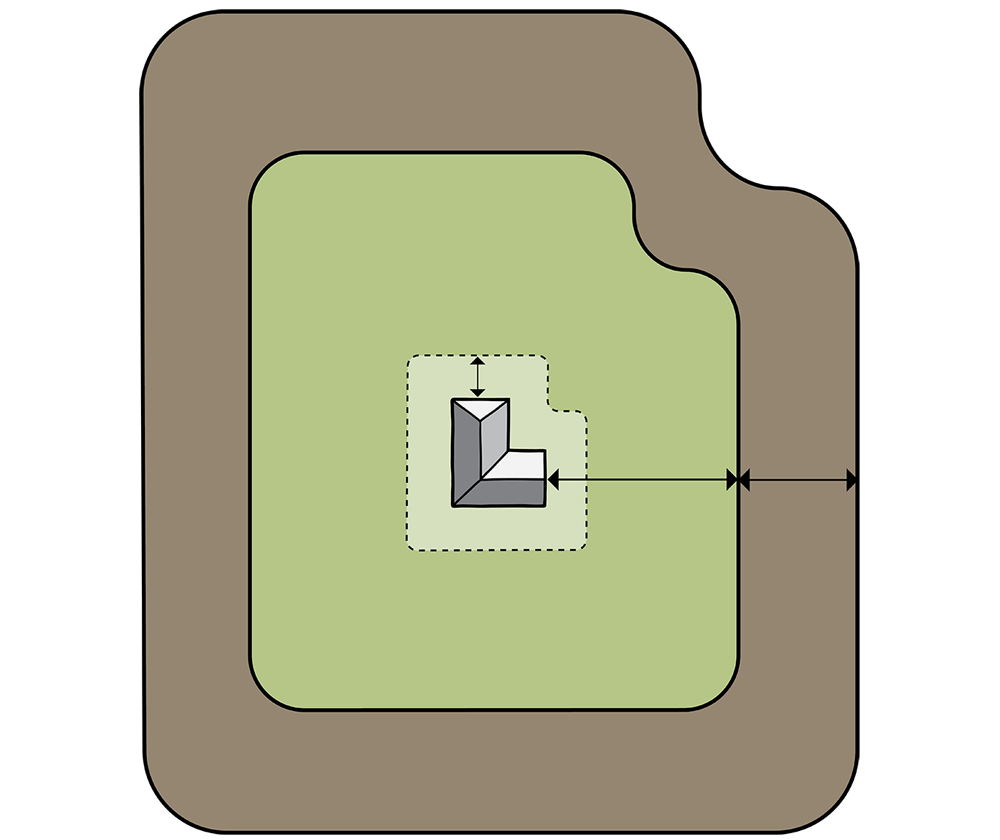
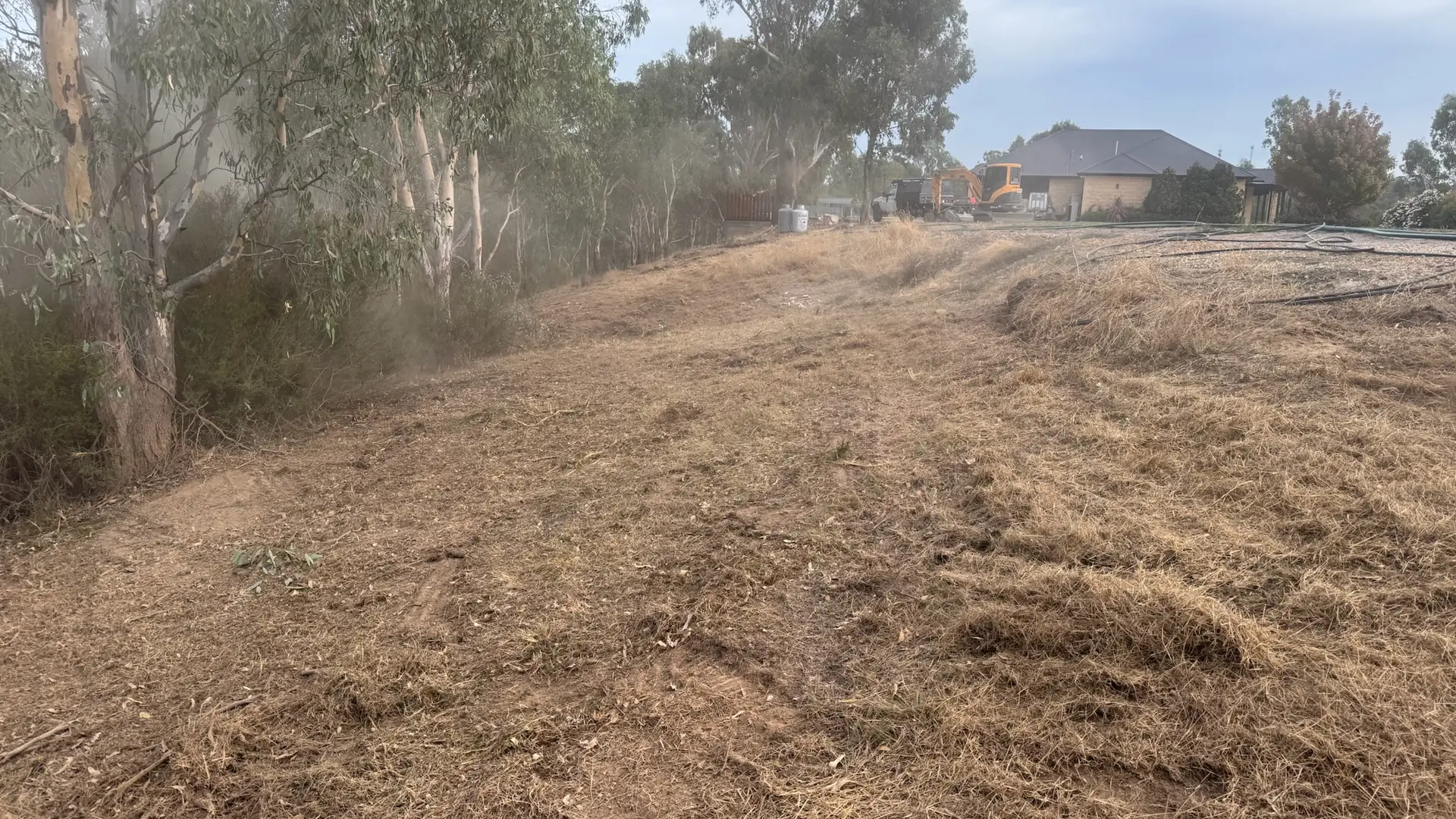
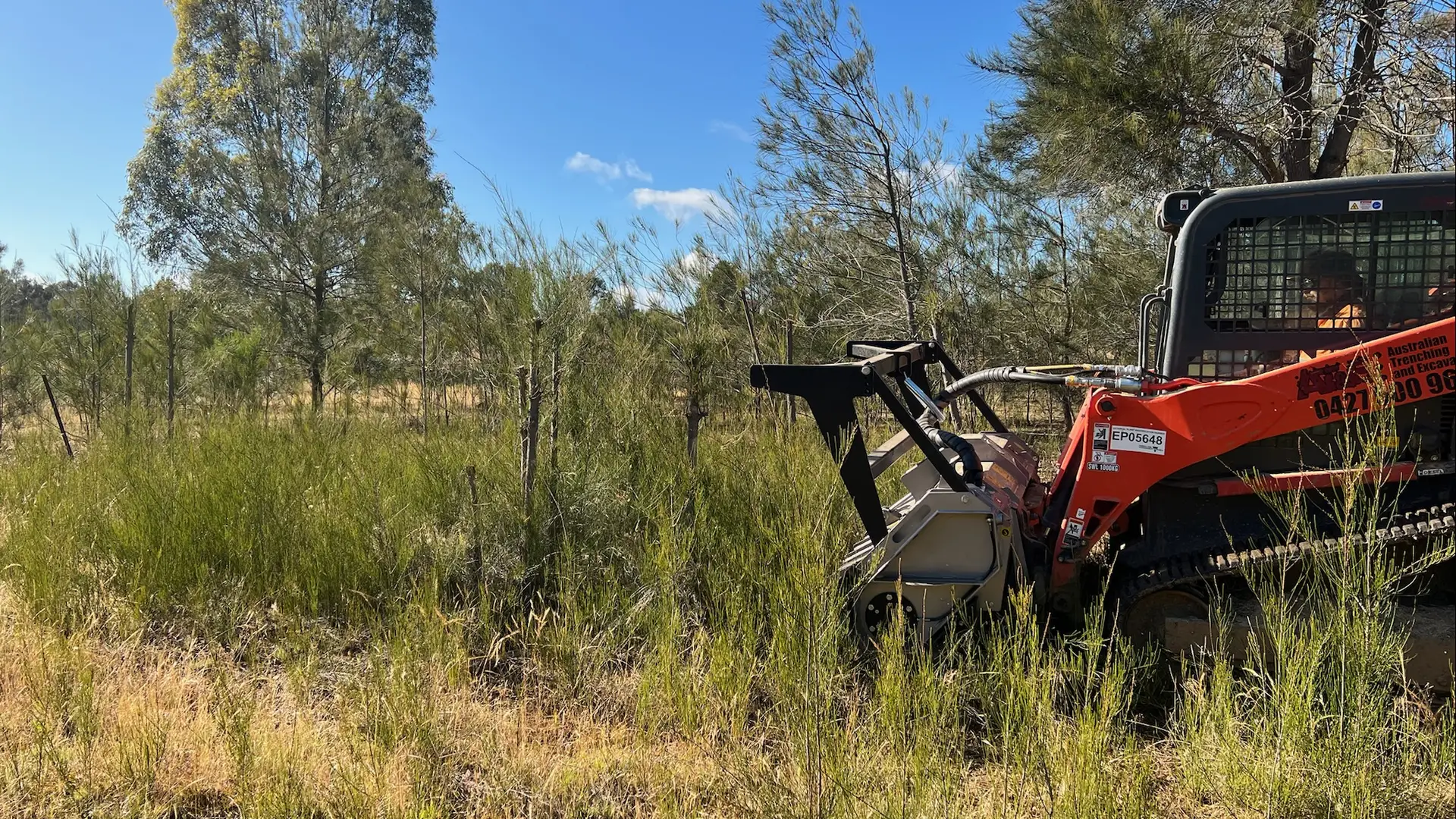
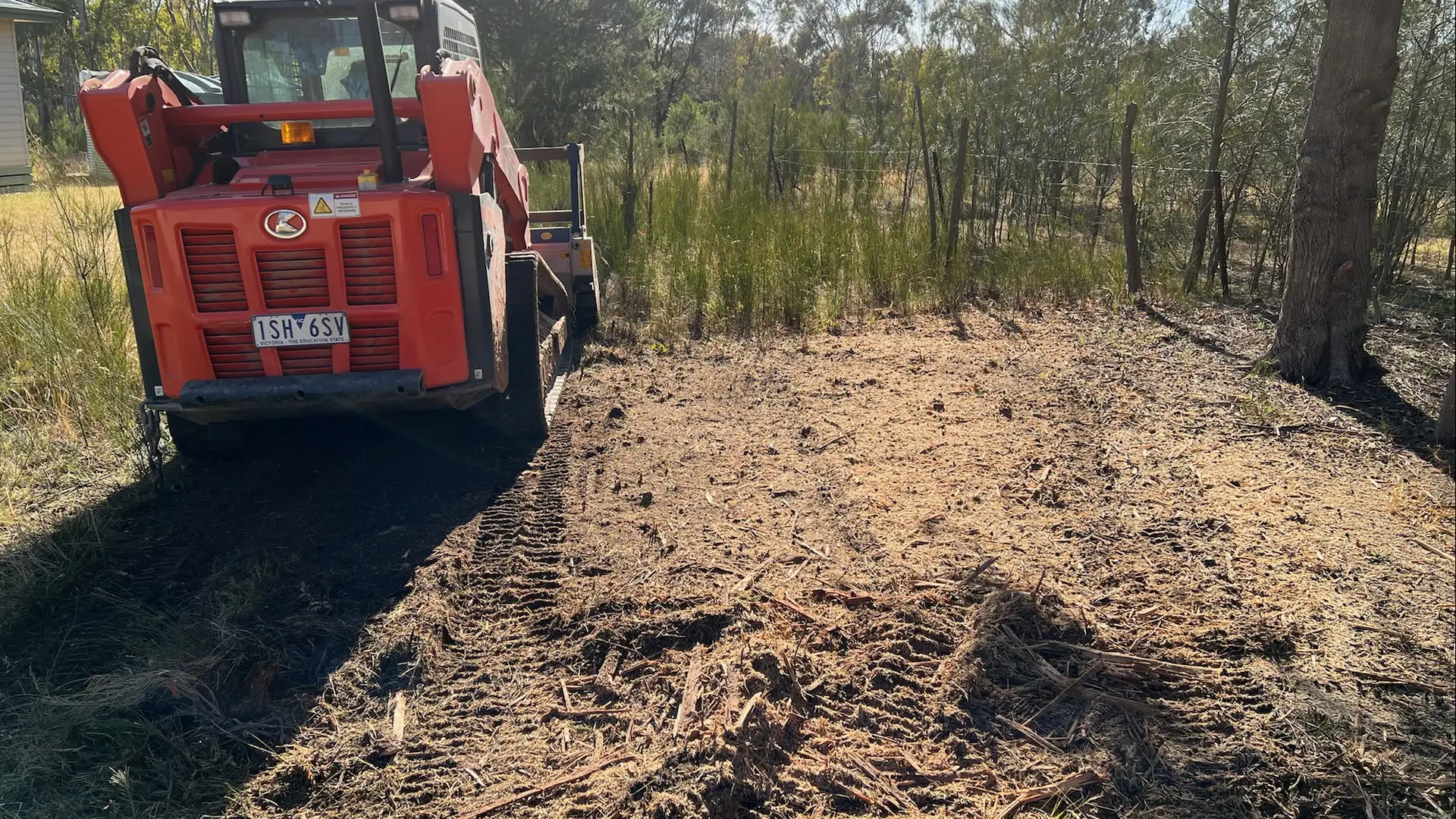
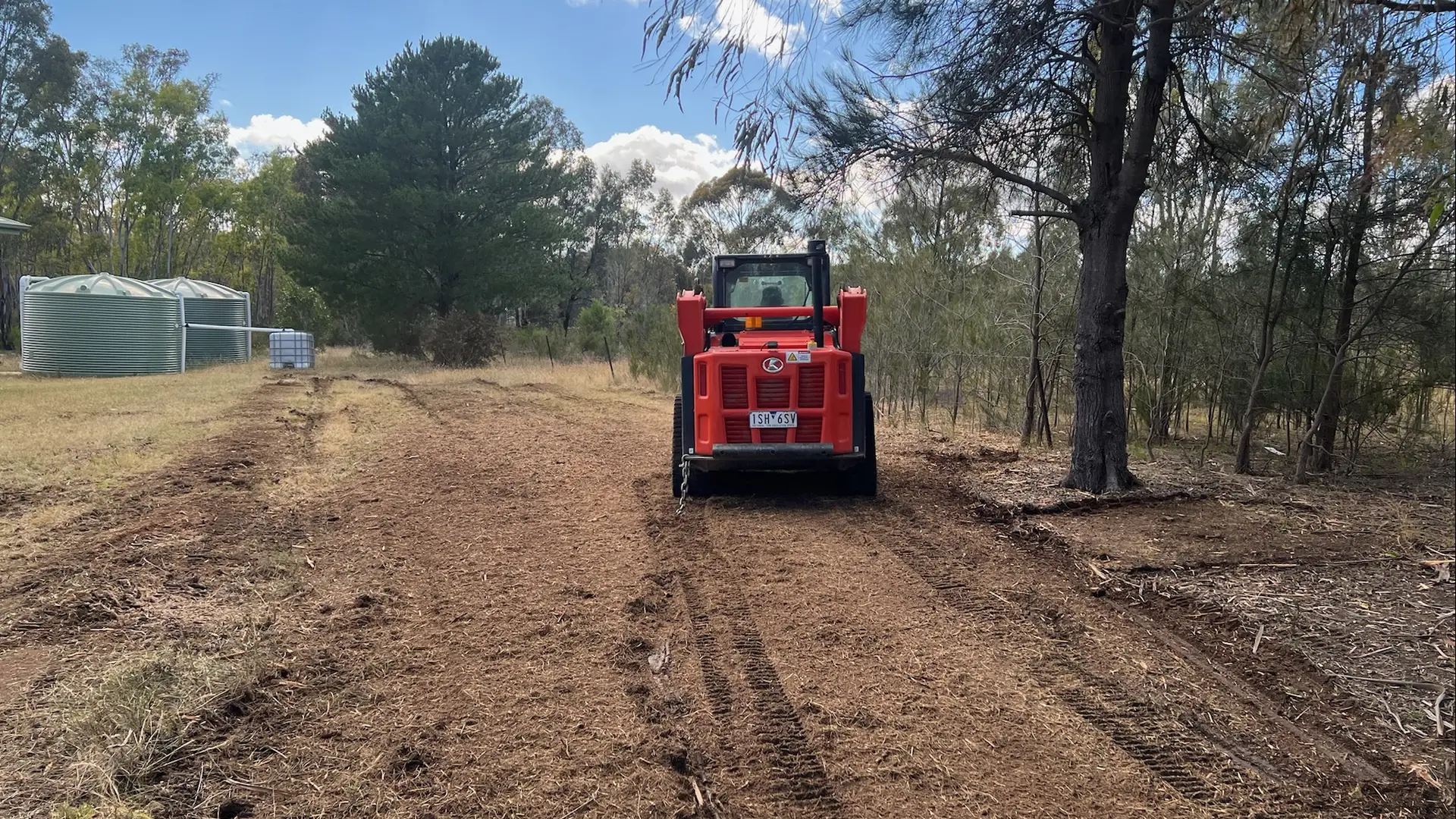
The CFA's inner zone requirements — the 10 metres immediately surrounding your home — call for all flammable objects, mulch, dense plantings, timber structures, gas bottles, wood piles, and organic materials to be either removed or relocated. The earthworks component of this work includes clearing and levelling the zone, grading it to drain correctly, and replacing organic ground cover with crushed rock or compacted gravel. We carry out the earthworks preparation for inner zone upgrades, leaving the area correctly shaped and ready for the final surface treatment.
Structural Terracing to Reduce Fire Travel Upslope
The CFA notes that fire burns faster uphill and that slope is one of the three primary factors driving bushfire intensity. A sloped garden on the uphill side of your home accelerates fire directly toward the structure. Terracing that slope — cutting level platforms into the hillside and retaining the faces with masonry — breaks the uphill run, reduces the grade that fire uses to build speed, and creates the low-fuel managed zones that the CFA recommends around the building. We shape the earthworks for terracing and retaining works as part of a complete fire safety landscaping scope.
Pools, Ponds & Water Features as Fire Barriers
The CFA recommends positioning pools, dams, tennis courts, and water features on the northern and western sides of a property — the sides most exposed to fire — as these non-flammable surfaces provide radiant heat separation between the fire hazard and the building. We carry out the earthworks excavation for pools, ponds, and water features, shaping and compacting to the design profile and ensuring correct drainage is integrated from the outset.
Working to CFA Guidelines
All fire safety landscaping earthworks we carry out reference the CFA's Landscaping for Bushfire: Garden Design and Plant Selection guide and CFA defendable space requirements. We focus on the earthworks and crushed rock components — the structural changes that require excavation, grading, and material placement. We work alongside your landscape designer or directly from your brief. For properties in the Bushfire Management Overlay, vegetation clearing requirements and planning permits should be confirmed with your local council before work begins.
Ready to Get Your Project Moving?
Contact us today for a free quote and consultation.