
Trenching: What is it? and how will it help me?
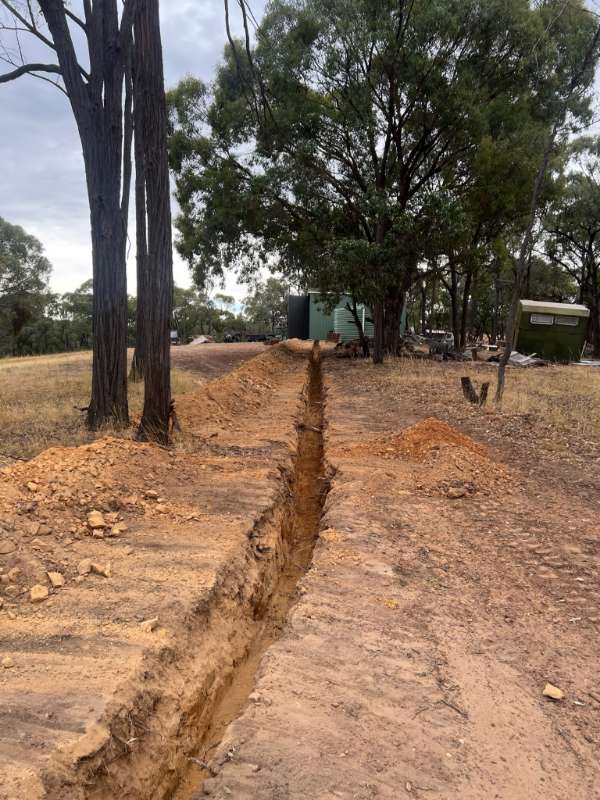
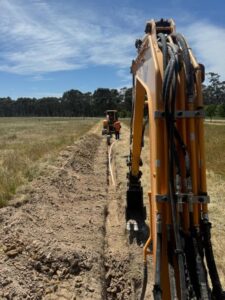
Trenching is a fundamental part of many construction and infrastructure projects; but what exactly does it involve? In simple terms, trenching refers to the process of digging a narrow, elongated excavation in the ground. While it might
sound straightforward, trenching plays a vital role in laying the groundwork (literally) for essential services like electrical cables, water pipes, gas lines, and drainage systems.
Whether you’re building a new home, installing underground utilities, or preparing a site for large-scale civil works, trenching is often one of the first steps in the process. It allows critical infrastructure to be installed safely and out of sight, protecting it from damage while maintaining the function and aesthetics of the surface above.
Visually, a trench might look like a simple cut in the earth, but there’s a lot more going on beneath the surface. Trenching requires precise planning, knowledge of underground conditions, and strict adherence to safety standards; especially when working near existing services or in populated areas.
In this blog, we’ll explore everything you need to know about trenching: from the different types and techniques; to the equipment used, and the safety considerations that come with it. Whether you’re a homeowner, contractor, or simply curious about what’s going on behind those construction fences, this guide will give you a clear understanding of what trenching is and why it matters.
Trenching and Excavating: What is the difference?
While trenching and excavating are often used interchangeably, they refer to distinct processes in construction and earth moving. Understanding the difference between the two is crucial for project planning, safety compliance, and selecting the right equipment.
Trenching involves digging a narrow, deep channel in the ground, typically longer than it is wide. Trenches are commonly used for installing utilities (such as water pipes, electrical conduits, or fiber optic cables) or creating drainage systems. Due to their depth and confined space, trenches require careful engineering and safety measures, such as shoring or benching, to prevent collapse.
Excavation, on the other hand, is a broader term that refers to any removal of earth, rock, or other materials to form a cavity or open space. Unlike trenching, excavations can be wide and shallow (like foundation or footing digs for buildings) or large and deep (such as mining or basement construction). Excavations may also include grading, land clearing, or creating embankments.
Key differences at a glance:
- Shape & purpose: Trenching creates long narrow cuts for utilities, while excavation covers a wider range of digging for foundations, basements, or landscaping.
- Depth vs. width: Trenches are deeper than they are wide, whereas excavations can vary significantly in dimensions.
- Safety considerations: Trenches pose higher risks of collapse, requiring strict protective systems like shoring or benching. Excavations may need different stability controls depending on size and soil conditions.
While both processes involve digging, trenching is a specialized form of excavation with unique challenges. Knowing which method your project needs ensures efficiency, compliance, and safety. Up next, we’ll explore the various uses of trenching in construction and infrastructure.
Trenching vs. Tunneling: Key differences and applications
While both trenching and tunneling involve underground excavation, they serve distinct purposes and require different approaches. Understanding these differences is crucial for selecting the right method for your project.
Trenching involves digging long, narrow excavations at or near the surface, typically no deeper than 6 meters. It’s characterized by:
- Open-top construction (exposed to air during work)
- Faster completion times
- Lower costs for shallow depths
- Used for utilities (water/gas pipes, cables), drainage, and shallow foundations
Tunneling creates enclosed underground passages, often at greater depths, featuring:
- Fully enclosed excavation
- Structural supports (liners, rings) for stability
- Higher costs and longer timelines
- Used for transportation (subways), deep utilities, and mining
Key Differences:
- Depth & structure: Trenches are shallow and open; tunnels are deep and enclosed
- Stability needs: Trenches may need temporary supports; tunnels require permanent reinforcement
- Surface impact: Trenching disrupts surface areas; tunneling minimizes surface disturbance
- Cost & time: Trenching is quicker/cheaper for short runs; tunneling becomes cost-effective for long, deep projects
When to choose each method:
- Trenching excels for:
• Utility lines in suburban areas
• Projects with space for open excavation - Tunneling is better for:
• Urban areas where surface disruption must be minimized
• Crossing beneath rivers, roads, or existing structures
This distinction helps engineers and contractors select the most efficient, cost-effective approach for underground projects.
What do we use trenching for?
Trenching is one of the most versatile and essential processes in construction, civil engineering, and utility installation. Its ability to create narrow, controlled excavations makes it indispensable for a wide range of applications. Here are some of the most common uses of trenching:
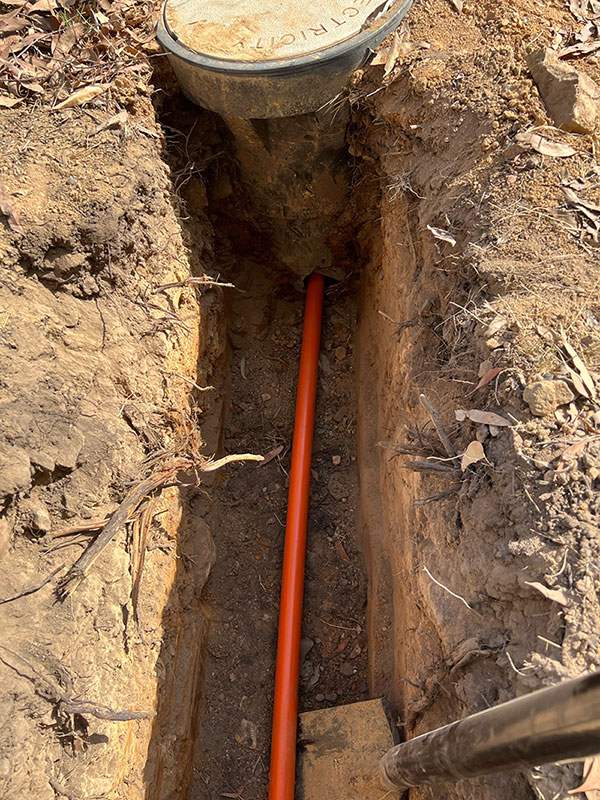
1. Utility installation & maintenance
The primary use of trenching is to lay underground utilities, including:
- Water & sewer lines – Trenches allow for the safe burial of pipes, protecting them from surface damage and freezing.
- Electrical & fiber optic cables – Underground cabling reduces visual clutter and minimises disruption from weather or accidents.
- Gas & oil pipelines – Trenches ensure secure, leak-resistant placement of energy transmission lines.
2. Drainage & irrigation systems
Proper drainage prevents flooding and soil erosion. Trenching is used to install:
- French or sub surface drains – Gravel-filled trenches redirect water away from structures.
- Agricultural irrigation – Trenches house drip lines or subsurface watering systems for efficient crop hydration.
3. Construction & foundation work
Trenches provide support for:
- Footings & foundations – Deep trenches distribute building loads evenly into stable soil.
- Retaining walls – A trenched base ensures proper anchoring and drainage behind walls.
4. Environmental & geo-technical applications
Trenching helps in:
- Soil Sampling & testing – Engineers dig trenches to analyse soil composition and stability.
- Contaminant barriers – Underground trenches can be filled with impermeable materials to block pollutants.
5. Military & Security Uses
Historically, trenches have been used for:
- Defensive fortifications – Military trenches provide cover and strategic positioning.
- Security perimeters – Deep trenches can act as physical barriers to restrict unauthorized access.
From urban infrastructure to rural farming, trenching plays a vital role in modern development. Next, we’ll explore the different types of trenching methods and their unique applications.
How deep should a trench be? factors to consider
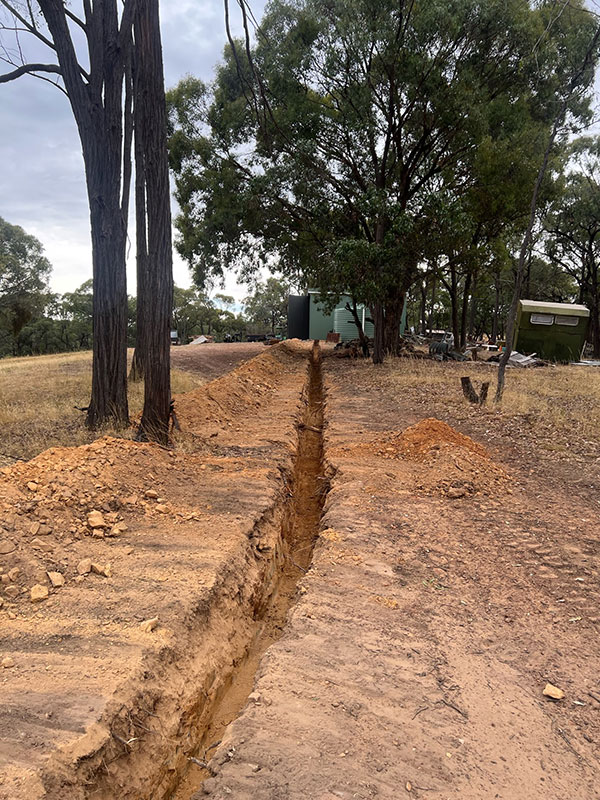
Trench depth requirements vary significantly depending on the application, soil conditions, and local regulations; particularly in Australia where climate and terrain demand careful planning. Here’s what determines your trench depth:
Utility – specific depth guidelines (Australia)
- Electrical cabling: Minimum 600mm depth (AS/NZS 3000), increasing to 750mm under roadways
- Water mains: 750mm – 1.2m to prevent freezing (southern regions) and meet WaterMark certification
- Sewer lines: 1.0m – 1.5m with gradient requirements (AS/NZS 3500)
- Gas pipelines: 1.0m minimum (AS 2885), deeper in high-traffic areas
Key depth determinants
- Frost line: Southern states require deeper trenches to prevent pipe freezing
- Traffic load: Roads/Driveways need 25% greater depth for protection
- Soil type: Clay soils may require shallower trenches than sandy soils
- Utility crossings: Additional depth when crossing existing services
Australian standards like AS 1742.3 (roadworks) and SA Water TS 501 provide specific depth charts. Always consult local authorities before digging.
Types of trenching methods and the equipment used
Trenching isn’t a one-size-fits-all process. The method and machinery chosen depends on the project’s scope, soil conditions, and purpose; whether it’s laying utilities, improving drainage, or stabilizing slopes. Below, we break down the most common trenching techniques and the equipment that makes them possible.
1. Conventional open trenching
- Method: Digging a straight, exposed trench using traditional earthmoving equipment.
- Equipment:
- Excavators with narrow trenching buckets (for precise utility lines).
- Backhoes (ideal for residential projects like sewer lines).
- Best for: Shallow water/gas pipelines or drainage systems in soft soil.
2. Trench-less trenching (Plowing/Moling)
- Method: Creating underground channels with minimal surface disruption.
- Equipment:
- Vibratory plows (for burying cables in loose soil).
- Directional drills (to steer around obstacles).
- Best for: Fiber optic lines or electrical conduits under roads.
3. Micro-trenching – Cut and Chase
- Method: Cutting ultra-narrow, shallow trenches (often in pavement).
- Equipment:
- Concrete saws or specialized micro-trenchers.
- Best for: Urban broadband installation with minimal restoration needed.
4. Chain/wheel trenchers
- Method: Using a toothed chain or wheel to cut through soil rapidly.
- Equipment:
- Wheel trenchers (for long, uniform trenches in farmland).
- Chain trenchers (for rocky or compacted soils).
- Best for: Rural utility projects or agricultural irrigation.
5. Rock trenching
- Method: Breaking through hard stone or bedrock.
- Equipment:
- Hydraulic rock saws (clean cuts).
- Excavators with hammer attachments (for fractured rock).
- Best for: Mountainous terrain or urban areas with rocky substrata.
6. Laser-guided trenching
- Method: Precision digging using GPS or laser leveling.
- Equipment:
- Excavators with GPS systems.
- Best for: Large-scale drainage or infrastructure requiring exact depth.
The importance of trenching safety
Selecting the right trenching equipment is only half the battle, ensuring worker safety is equally critical. From trench boxes to shoring systems, protective equipment isn’t just a best practice; it’s often a legal requirement to comply with occupational safety laws.
Why safety matters
- Trenches deeper than 1.5 meters (5 feet) pose collapse risks, which account for nearly 40% of excavation fatalities (OSHA).
- Proper safety measures: like sloping, shielding, or benching; can prevent cave-ins, falls, and equipment accidents.
Essential safety equipment
- Trench Boxes (Shields): Steel or aluminum structures that brace trench walls.
- Hydraulic Shoring: Adjustable supports for unstable soil.
- Benching/Sloping Tools: Equipment to angle trench walls safely.
- Gas Detectors: Critical when working near underground utilities.
By integrating safety into every phase of trenching, projects protect workers, avoid costly delays, and stay compliant.
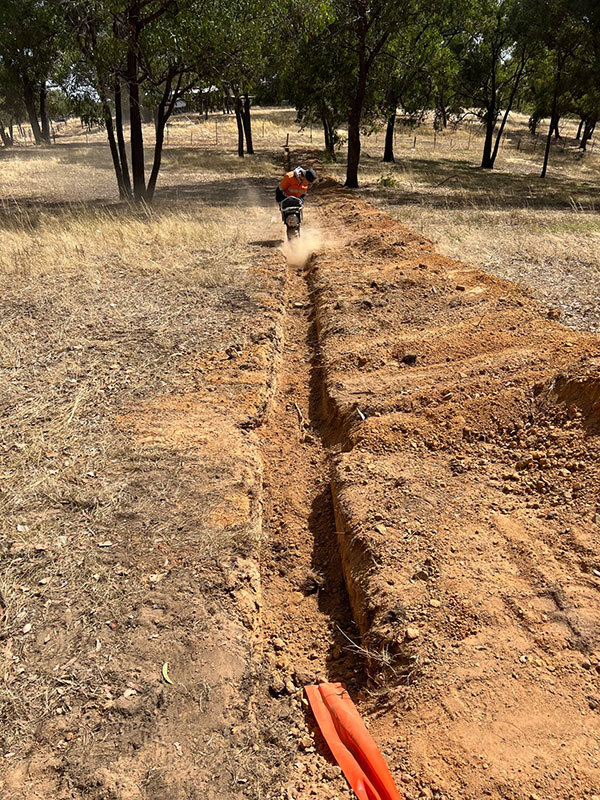
Common trenching hazards and how to avoid them
Even with the right equipment, trenching carries inherent risks. Here’s how to mitigate the top dangers:
1. Trench collapses (cave-ins)
- Cause: Unsupported walls, waterlogged soil, or vibrations from nearby machinery.
- Solution: Use trench boxes or slope walls at a safe angle (per OSHA/WorkSafe guidelines).
2. Striking underground utilities
- Cause: Poor planning or outdated utility maps.
- Solution: Always “Dial Before You Dig” (in Australia: 1100) and use ground-penetrating radar.
3. Falls and equipment accidents
- Cause: Unprotected edges or poorly trained operators.
- Solution: Install guardrails, restrict access zones, and certify equipment operators.
4. Hazardous atmospheres
- Cause: Methane, carbon monoxide, or low oxygen in deep trenches.
- Solution: Ventilate trenches and use gas monitors before entry.
Proactive hazard management keeps projects on track and workers safe.
Trenching regulations and OSHA standards (global overview)
Trenching safety isn’t optional, it’s enforced by strict regulations worldwide:
Key OSHA Standards (U.S.)
- 29 CFR 1926.651-652: Requires protective systems for trenches 5+ feet deep.
- Competent Person: Must inspect trenches daily and after hazards (e.g., rain).
EU/UK Guidelines
- EN 791: Standards for temporary earthworks supports.
General Best Practices
- Permits: Often required for deep or urban trenching.
- Inspections: Mandatory before worker entry.
Adhering to these rules prevents fines and fatalities.
Regulatory requirements for trenching in Victoria, Australia
In Victoria, trenching falls under WorkSafe Victoria and the OHS Act 2004, with specific mandates:
- AS 4745 Compliance: Temporary support systems must meet Australian standards.
- Permits: Notify WorkSafe for trenches deeper than 1.5m (or 1m near traffic).
- Engineered Controls: Required for depths exceeding 3 meters.
- Competent Person: Must oversee inspections and soil classification.
- Penalties: Fines up to $3.6M AUD for corporations violating OHS laws.
Always consult WorkSafe Victoria’s excavation code of practice before breaking ground.
Regarding trenching, what is the best option for me?
Selecting the right trenching approach depends on five key factors:
1. Project scope
- Small-scale (homeowner): Mini-excavators or manual trenching for garden irrigation
- Large-scale (commercial): Hydraulic trenchers or GPS-guided excavators for utility networks
2. Soil conditions
- Soft soils: Chain trenchers or backhoes
- Rocky terrain: Rock saw attachments or pneumatic hammers
3. Depth requirements
- Shallow trenches (<1m): Open trenching or plowing
- Deep trenches (1m+): Engineered shoring systems
4. Regulatory compliance
- Urban areas: Micro-trenching to minimize disruption
- Protected zones: Non-destructive digging (NDD) near utilities
5. Budget & timeline
- Low-cost: Manual methods for short runs
- Time-sensitive: Trenchless technologies for rapid completion
Specific advice for Australians involved in trenching:
- Always contact Dial Before You Dig (1100)
- Engage licensed contractors for gas/electrical work
- Document all trench inspections per WorkSafe requirements
By weighing these factors against Australian standards and site conditions, you’ll choose the safest, most efficient trenching solution for your needs.
Contact Australian Trenching and Excavation for your trenching inquiries.
The extensive knowledge of Australian Trenching and Excavation, enabled this blog post by Web F5.
Ready to Get Your Project Moving?
Contact us today for a free quote and consultation.